KAZAKHSTAN

Astana’s Rise: Where Substance Meets Style

A city once mocked as spectacle is growing into something more substantial

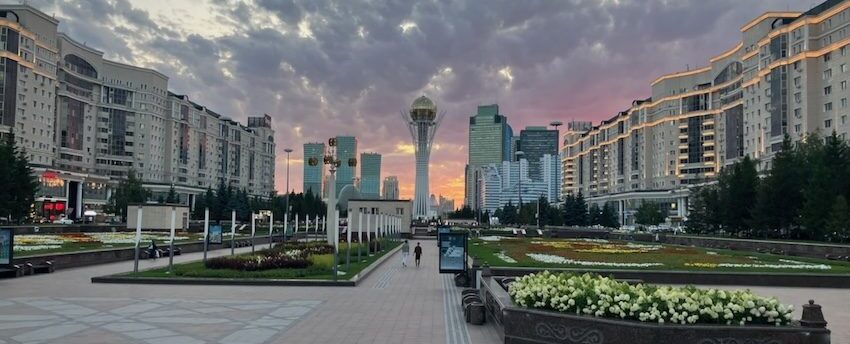
Astana city view featuring Bayterek Tower, modern buildings, and flower gardens at sunset, Kazakhstan landmark.
Bayterek Tower in the centre

Astana, Kazakhstan’s capital since 1997, has evolved from a futuristic architectural experiment into one of Central Asia’s fastest-growing cities. Once dismissed by some outsiders as little more than spectacle, the city is increasingly proving itself to be far more functional and livelier than its critics imagined.

With its striking skyline, sometimes eccentric architecture and rapidly growing population, Astana today feels far removed from the “toy city” label occasionally attached to it in earlier years. Packed buses, sprawling apartment districts and expanding business areas suggest a capital that is now growing into itself.

While Astana may lack the historical depth of cities such as Almaty or Turkistan, it offers something different, a glimpse into what a more modern and outward-looking Central Asia may increasingly resemble.

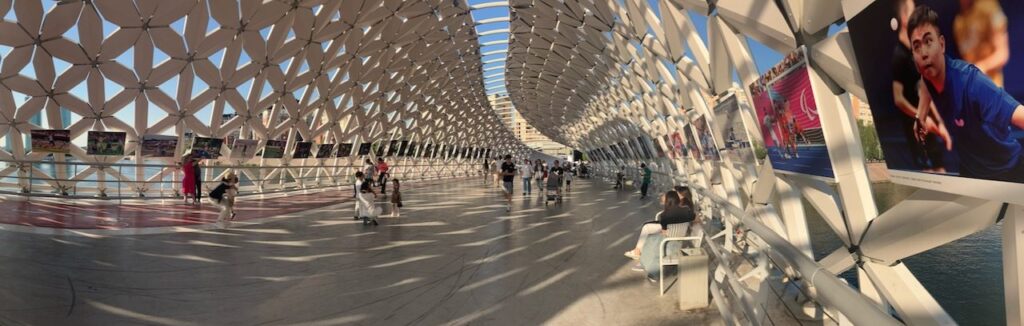
Astana bridge view: People walking through a modern, covered bridge with geometric patterns and photo displays.
Atyrau Bridge

Astana at a glance

  • Kazakhstan’s purpose-built capital since 1997, known for its futuristic architecture.
  • Rapidly transformed from a political project into a city of nearly 1.5 million people.
  • Home to some of Central Asia’s most striking modern buildings, malls and skylines.
  • Harsh winters shape everyday life, architecture and the city’s indoor culture.
  • Surprisingly easy to navigate thanks to an extensive bus network and growing infrastructure.

From “toy city” to thriving capital

Astana has been Kazakhstan’s capital since 1997, and in that time it has transformed into a city known not just for its striking skyline but also for its growing energy. While it was once dismissed by some as an architectural oddity, often compared to Dubai for its futuristic design, today Astana’s vibrancy increasingly rivals that of Almaty, the country’s commercial powerhouse. In the past, it was easy for outsiders to view Astana as more spectacle than substance. A 2015 article in The Guardian even dubbed it a “toy city,” a sentiment shared by many observers at the time.

New capitals often attract mixed reviews. I have seen both ends of the spectrum myself — while Ankara impressed me with its blend of tradition and modernity, Brasilia felt oddly disconnected from the essence of Brazil, and Naypyidaw, Myanmar’s capital, seemed more surreal than functional, with its eerie, empty 20-lane highway as its centrepiece. Yet Astana breaks this mould. It is not just the bold, sometimes quirky architecture that makes it stand out, but the fact that these buildings form the backdrop to a city that feels genuinely alive, increasingly functional and now home to nearly 1.5 million people. The packed buses during rush hour and sprawling residential developments tell the real story of Astana’s growth.

Why does Astana have so many names?

Despite its rapid development, Astana is not without quirks that make it easy to poke fun at. The city holds the unusual distinction of having undergone more name changes than perhaps any other capital city. Beginning as Akmolinsk, then Tselinograd and later Aqmola, it became simply Astana — meaning “capital” in Kazakh — in 1997. In 2019, however, the city was renamed Nur-Sultan in honour of the country’s long-serving president following his retirement. By 2022, it had reverted back to Astana, reflecting Kazakhstan’s attempt to balance legacy with a more forward-looking identity. The confusion still lingers: train tickets and maps sometimes display both names. On one ticket, I arrived in Astana; on another, I departed from Nur-Sultan — yet both somehow took me to the same station!

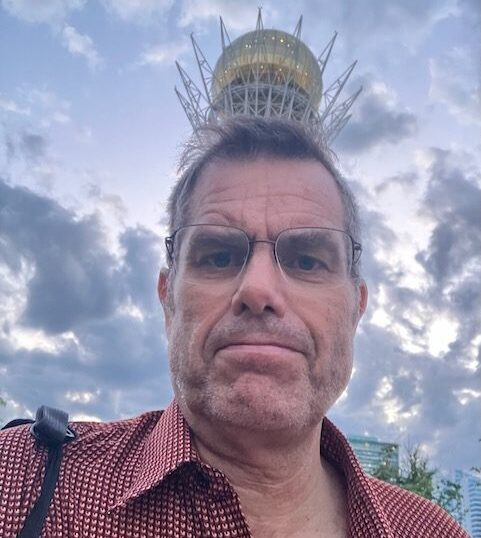
Astana, Kazakhstan: Man poses with Bayterek Tower, a famous landmark. Travel photography in Kazakhstan.
Wearing the crown
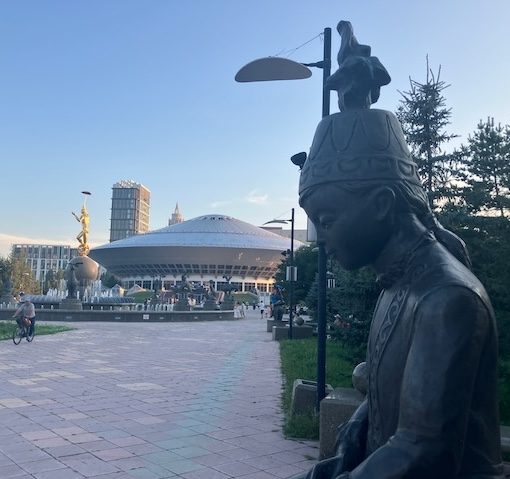
Circus view featuring a statue, unique building, and fountain in Kazakhstan. Travel destination and cultural landmark.
Stolichny Circus

Astana’s skyline and economic growth

Astana’s office market is booming, with 1.158 million sqm of Grade B office space and above, not far behind Almaty’s 1.165 million sqm, according to Cushman & Wakefield. The city’s offices are home to tenants from sectors including mining, energy, transport and a rapidly expanding IT industry, heavily supported by government initiatives. While wealth in many countries tends to concentrate heavily in commercial capitals, Kazakhstan’s resource-rich economy spreads wealth generation more widely across the country. Astana nevertheless plays an important role as a commercial and administrative hub for industries operating in the north and east, including mining activity in the nearby Karaganda region.

Industrial production also plays a role, with factories on the city’s outskirts focused mainly on food processing and construction materials. Astana’s rapid growth is visible in its near-constant construction, including the long-awaited 21.5 km metro system that will eventually connect the airport, new train station and city centre. Inbound investment remains concentrated in real estate and transport infrastructure — sectors critical to supporting the city’s continued expansion.

Baiterek and other towers reshaping Astana

Most visitors to Astana will quickly notice the 97-metre Baiterek Tower [map], the city’s defining landmark and symbolic centrepiece. While the views from the top are popular with tourists, the tower’s yellow-tinted glass slightly detracts from the experience. It does, however, make for a rather good crown-like selfie. Beyond Baiterek, Astana’s skyline is filled with a mix of functional and architecturally distinctive buildings that reflect the city’s rapid modernisation. Unlike many vanity projects elsewhere, most structures here serve a practical purpose, supporting Astana’s growing role as a regional hub.

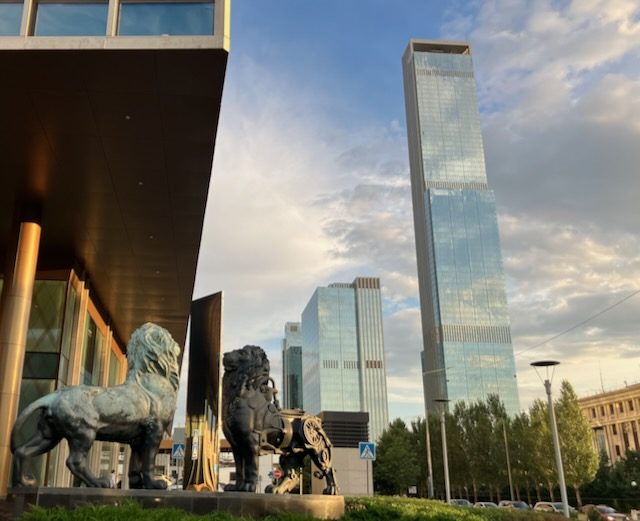
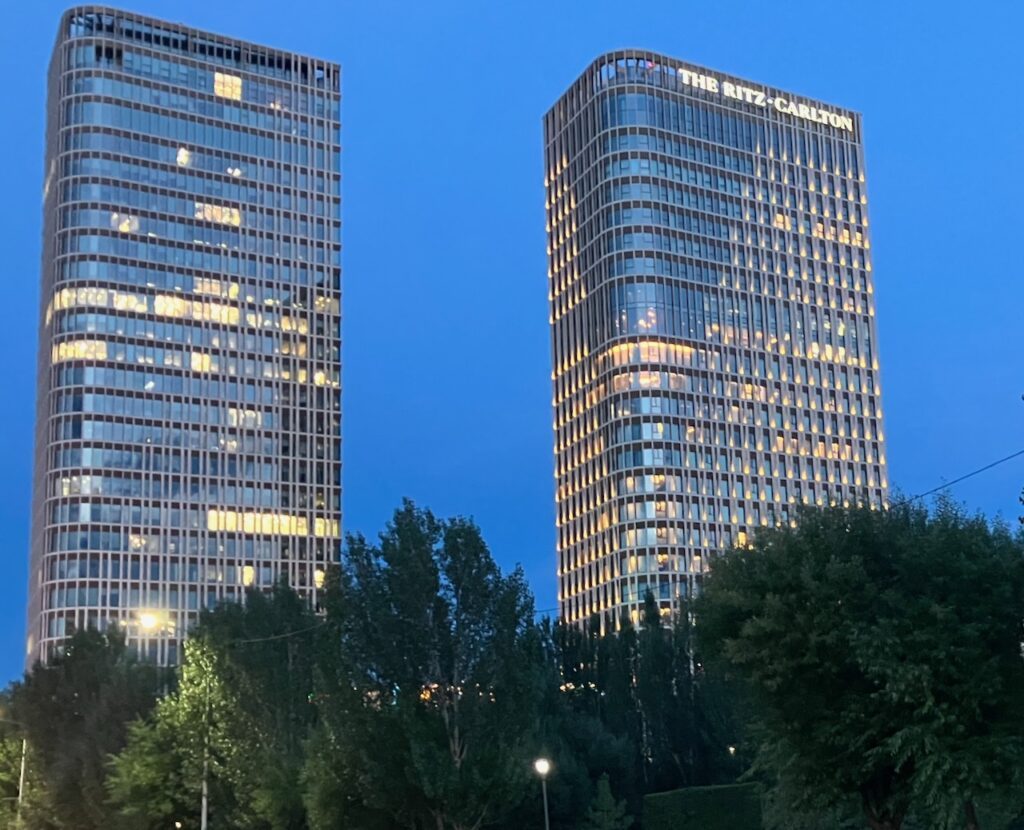
The skyline is dominated by modern office towers. The tallest of them all, Abu Dhabi Plaza [map], rises to 311 metres and is directly connected to the future metro line, expected to open in 2026. Nearby stands Talan Tower, with both buildings classified as Grade A office space and forming part of mixed-use developments combining luxury hotels and offices for international companies.

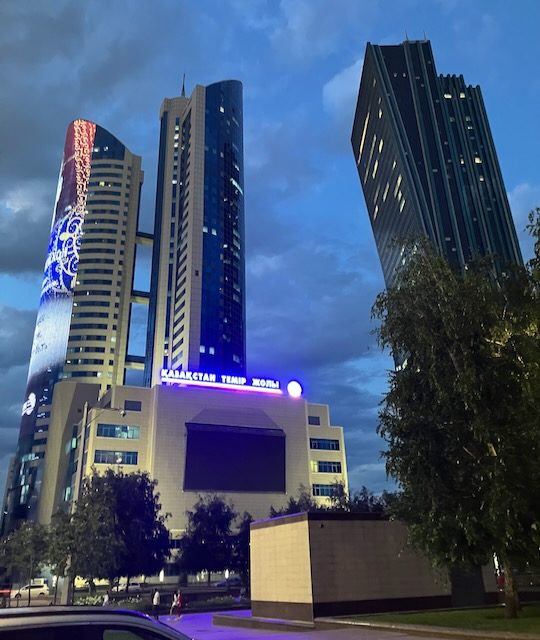
Close to the Baiterek Monument stand the distinctive Emerald Towers, designed by Canadian architect Roy Varacalli. Originally intended as a trio, only two towers were completed following the 2008 financial crisis, though they still reach impressive heights of 201 and 180 metres. The tallest houses KazMunayGas, Kazakhstan’s national oil and gas company. Nearby, the Kazakhstan Temir Zholy Towers serve as headquarters for the national railway company. One of the earlier additions to the skyline was Astana Tower, which marked the beginning of the city’s architectural evolution.

Astana architecture: Lion statues guard a modern building with a towering skyscraper in the background. Cityscape view.
Abu Dhabi Plaza
Astana's Talan Towers: Modern architecture featuring The Ritz-Carlton. Skyscrapers illuminate the city skyline at dusk.
Talan Towers
Temir Zholy Tower and Emerald Tower in Astana, Kazakhstan. Modern architecture and city skyline.
Temer Zholy Tower & Emerald Tower
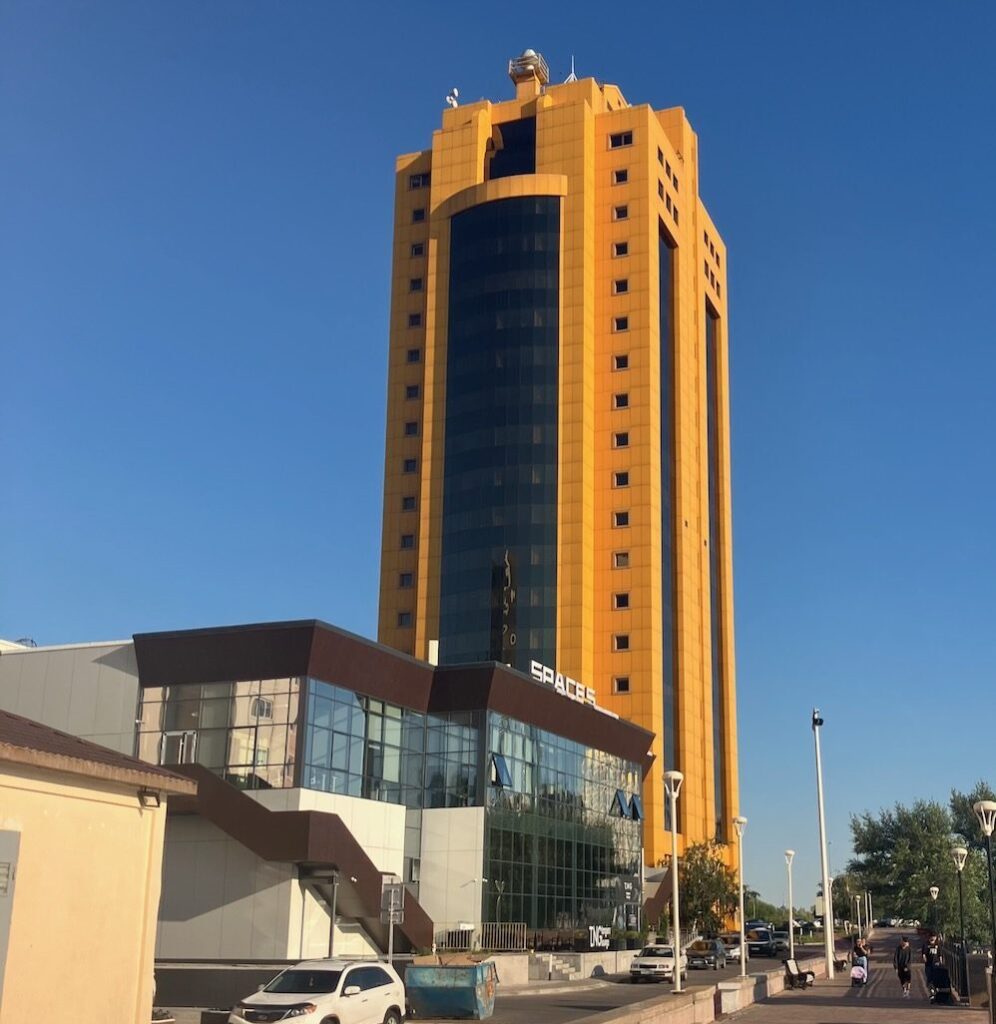
Astana cityscape: Tall yellow building with glass facade under a clear blue sky in Astana, Kazakhstan.
Almaty Tower

Winter shapes life in Astana

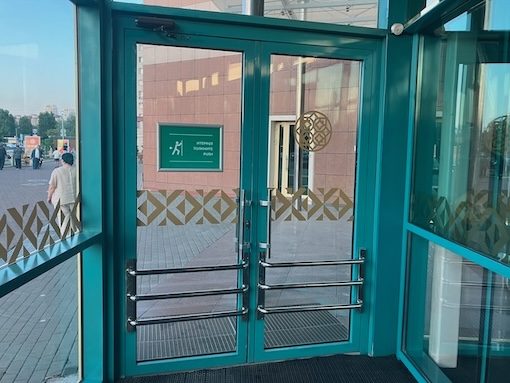
During my visit, temperatures ranged from 20 to 32 degrees Celsius, making it pleasant to stroll along Astana’s wide boulevards. However, the city’s long winters are a very different story. Astana is the second coldest capital in the world after Ulaanbaatar, with temperatures regularly falling to around -35°C. As a result, large indoor spaces are essential, providing not only sports facilities but also a wide range of international-quality shopping centres. The entrances to many malls may initially feel somewhat austere, often featuring heavy fire doors instead of welcoming sliding glass, though this design makes perfect sense given the brutal winter climate.

Khan Shatyr and life indoors

One standout is Khan Shatyr shopping mall [map], one of the more unusual retail centres I have visited anywhere. Designed by Norman Foster and completed in 2006, its vast 90-metre-high tent structure adds a dramatic feature to Astana’s skyline, particularly when illuminated at night. Inside, you will find everything from a small amusement park to an artificial beach at the top — an understandably popular escape for locals given the city’s extreme winters and complete lack of coastline.

Entrance to a building in Astana with glass doors, geometric patterns, and chrome handles. Represents modern architecture in Astana.
Typical door entrance to mall
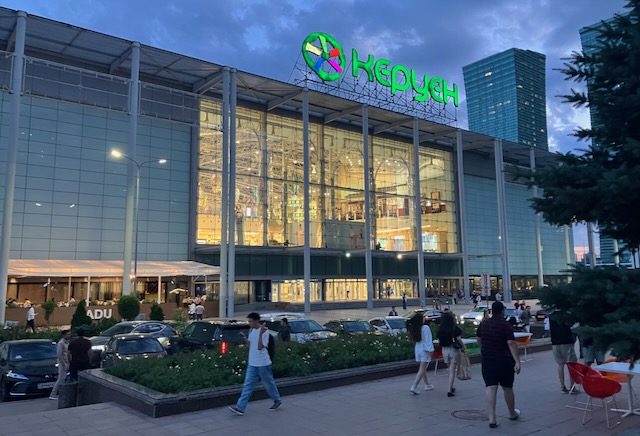
Keruen City, Astana: A modern shopping center with a glass facade and people walking by, showcasing urban life in Kazakhstan.
Keruen shopping mall
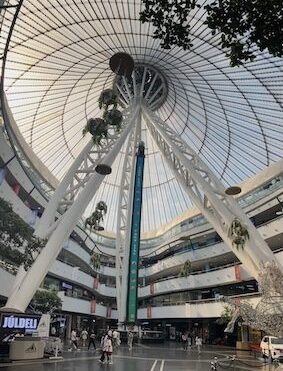
Astana's Khan Shatyr entertainment center interior view, featuring a transparent dome and modern architecture. Shopping mall.
Interior of Khan Shatyr
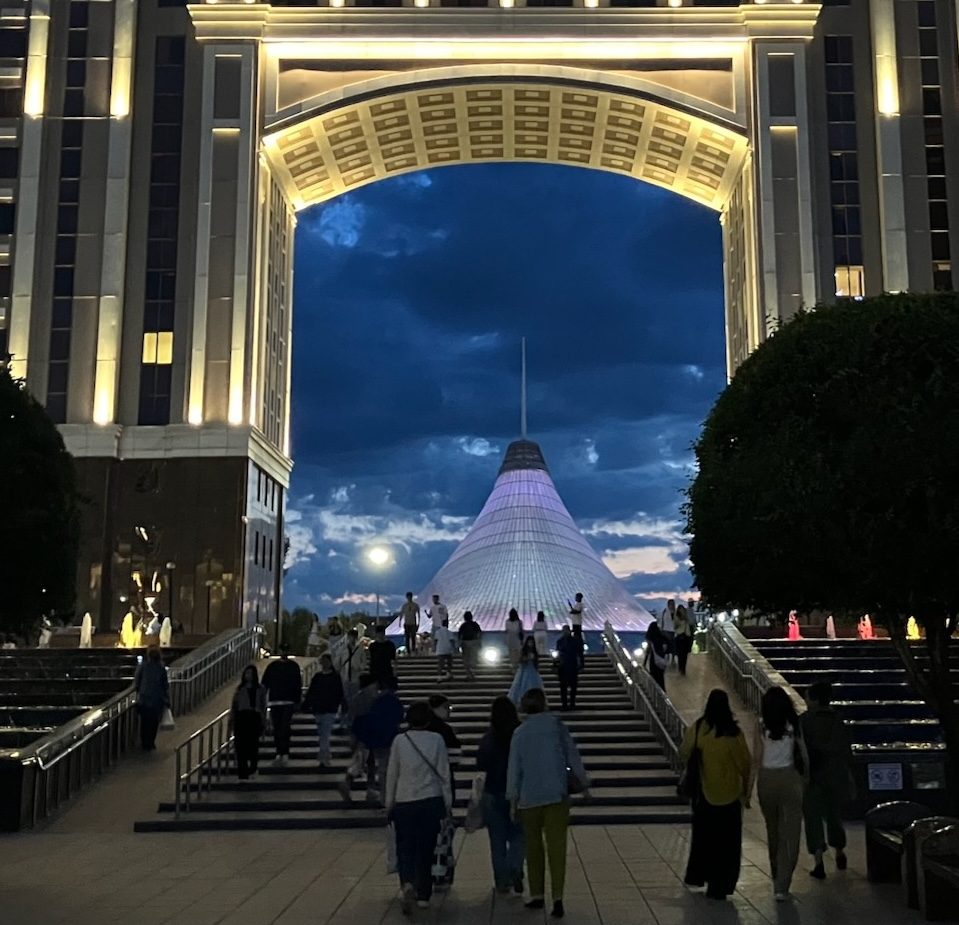
Astana city view: Khan Shatyr Entertainment Center seen through archway, people on stairs. Travel to Kazakhstan.
Khan Shatyr behind ministry building

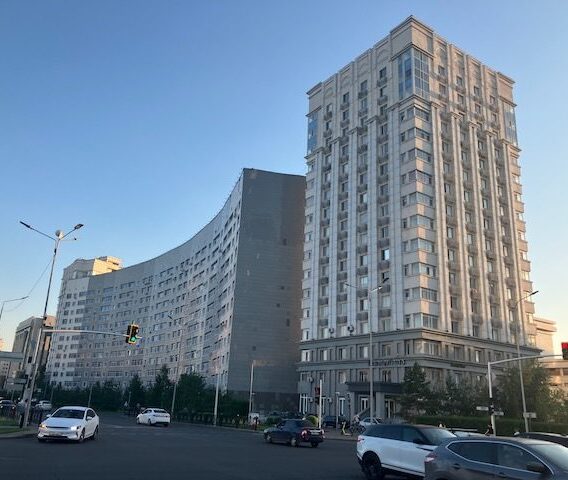
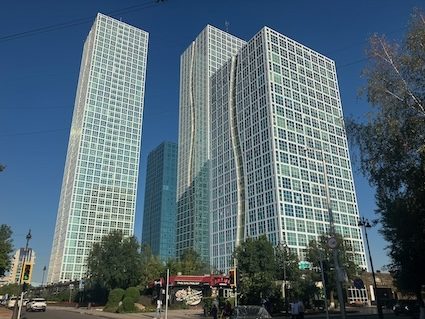
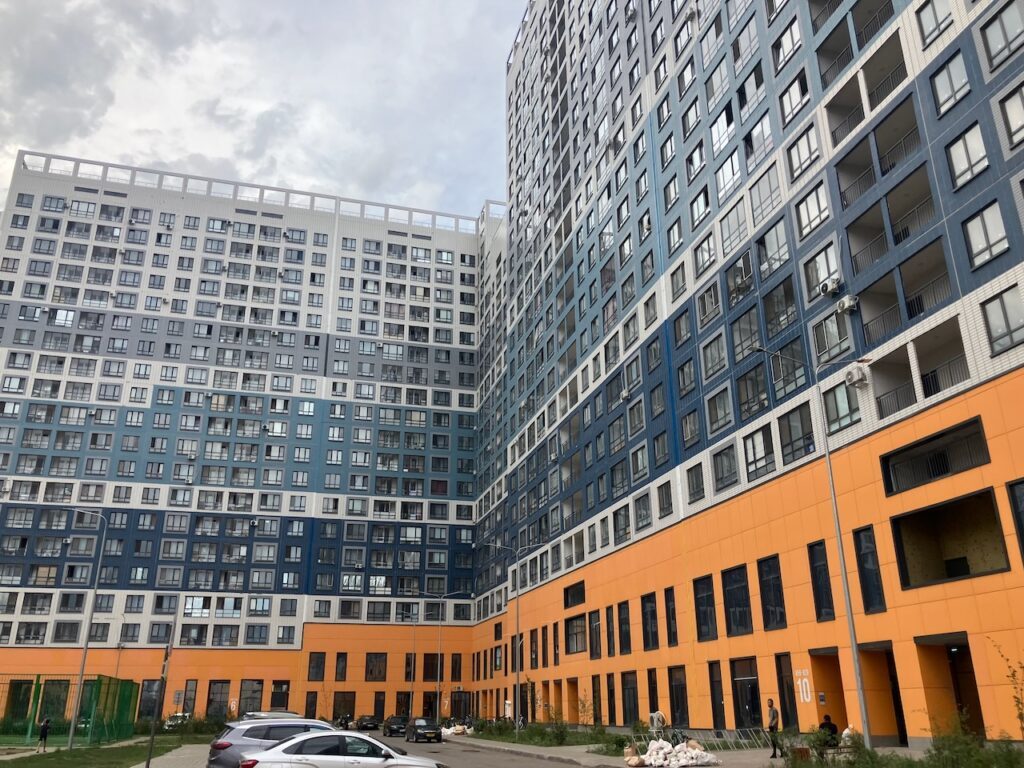
Living in Astana: homes, hotels and city growth

Unlike most Kazakh cities, Astana lacks the Soviet-era apartment blocks common elsewhere, as much of its growth took place after independence in 1991. In their place are modern, larger apartment buildings ranging from middle-class residences to luxury developments. Interestingly, despite the city’s abundance of space, luxury villas remain relatively limited.

While many of the newer developments are grander, some design elements still echo Soviet architecture. Ground floors often feature retail outlets, albeit with more upscale offerings, while residential entrances are typically tucked away at the rear. Most apartment complexes also include the obligatory children’s playgrounds.

A further nod to Soviet-era design can be seen in the indoor balconies found in many units. Some luxury buildings, with expansive windows and sleek façades, could easily be mistaken for office towers. In Astana’s long, dark winters, natural light becomes a valuable asset, making larger windows both practical and aesthetically appealing.

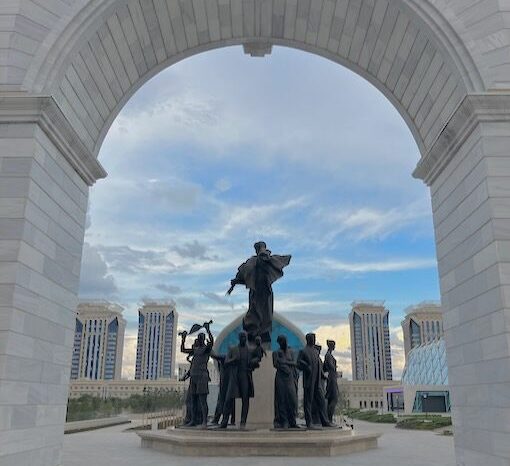
Astana, Kazakhstan, cityscape view through archway featuring a monument with figures and modern buildings in background.
Zhanuya apartments behind statue
residential buildings: Modern architecture in Kazakhstan's capital city. Urban landscape with high-rise apartments and car traffic.
Zhk Gratsiya apartments
Grand Alatau residential complex in Astana, modern architecture with tall glass skyscrapers against a blue sky.
Grand Alatau Residential Complex
Astana cityscape: Modern high-rise apartment buildings with blue, white, and orange facades under a cloudy sky in Astana.
My accommodation - Altyn Shar 2

Hotels, short stays and Astana’s growing visitor economy

Astana’s hotel industry has expanded rapidly, supported in part by preferential lending from the Kazakh government aimed at strengthening the hospitality sector. This has helped fuel a surge in branded hotels, particularly in the four- and five-star categories. International names such as Sheraton, St. Regis and Radisson now form part of the skyline, reflecting Astana’s role as a political and business centre. Newer developments, including the Hilton Astana within the Expo 2017 complex, further highlight the city’s emphasis on high-end, business-oriented accommodation. The growth in branded hotels has helped raise hospitality standards while also positioning Astana as a destination for conferences and major international events, strengthening its role as a commercial hub.

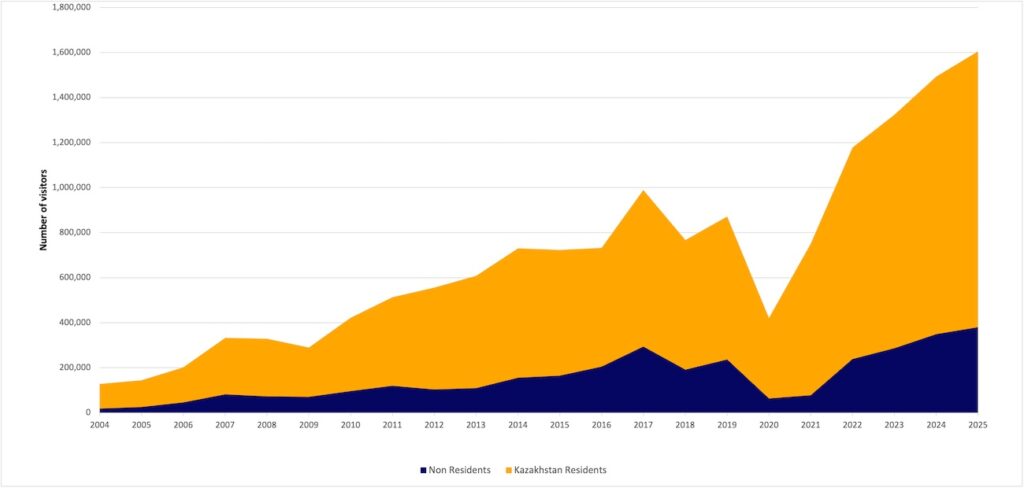
Visitor numbers to Astana have risen sharply over the past two decades, surpassing 1.6 million in 2025, with foreigners accounting for nearly a quarter of arrivals. These figures now comfortably exceed the previous high seen in 2017, when Expo 2017 temporarily boosted tourism to the capital. Although Covid disrupted the hotel industry, Astana’s dependence on business and official travel helped occupancy remain more stable than in typical leisure destinations and contributed to a relatively quick rebound

Chart: Visitors to Astana for each year

Tourism up to 2025 Astana
Source: Bureau of National Statistics
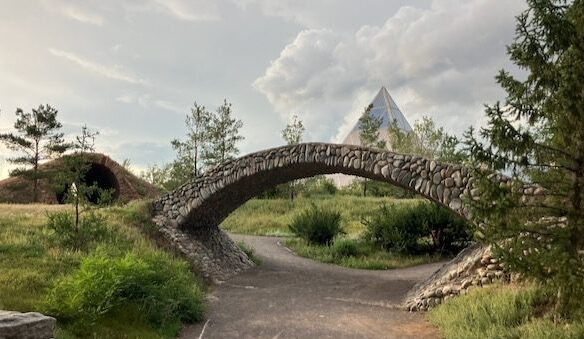
Astana's Palace of Peace and Reconciliation view through stone bridge, unique architecture in Kazakhstan, pyramid building.
Palace of Peace and Reconciliation behind stone bridge
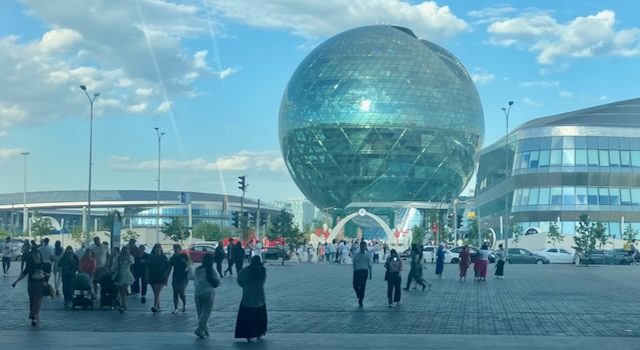
Astana city view: Globe building and people walking. Modern architecture and urban scene in Kazakhstan.
Future Energy Museum Nur Alem

Tonys' takeaway

Astana may not be what first comes to mind when people think of Central Asia, but its extreme modernity offers a fascinating glimpse into where parts of the region may be heading. For those interested in what Central Asia is becoming, rather than what it once was, Astana is a surprisingly compelling destination. Of all the cities I visited in the region, it stood out as the most interesting — not just for its striking architecture, but because beneath the spectacle sits a city that increasingly feels functional, lived-in and genuinely enjoyable to spend time in.
Its proximity to more traditionally Soviet cities such as Pavlodar and Karaganda only adds to the appeal, offering a striking contrast with the industrial landscapes of northern Kazakhstan. And if all the futuristic architecture becomes a little overwhelming, there is always the reassuring sight of an English ale quietly sitting on a supermarket shelf.
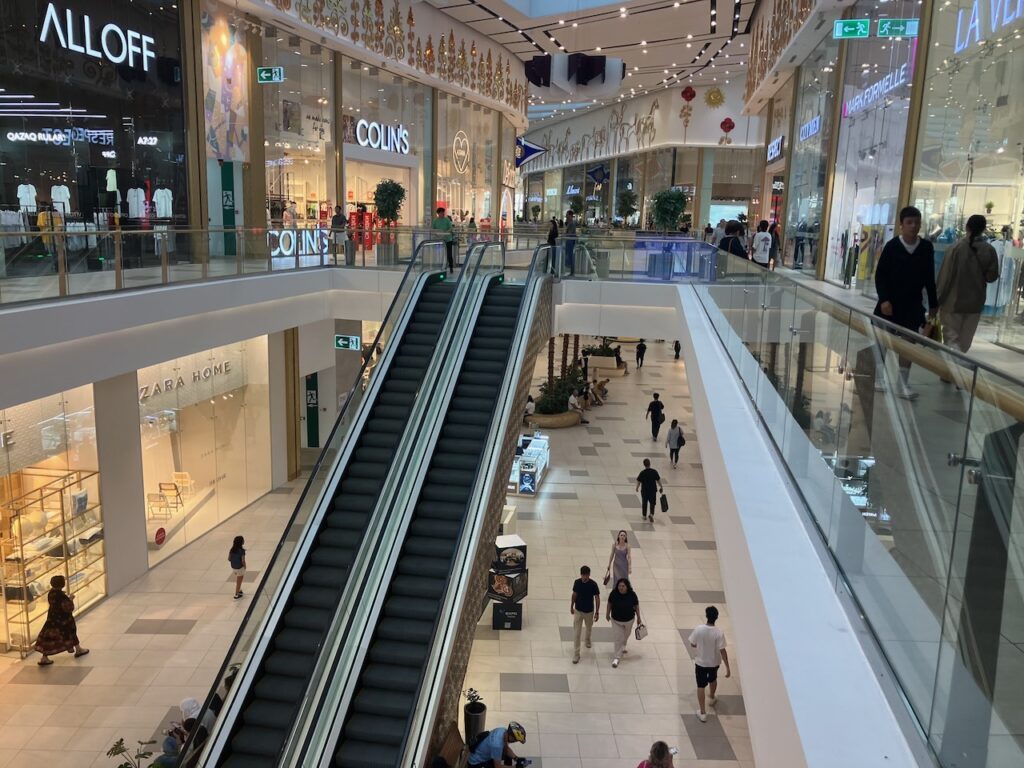
Shopping mall interior in Astana, Kazakhstan. Features escalators, retail stores like Zara Home, and shoppers on multiple levels.
Mega Silk Way mall
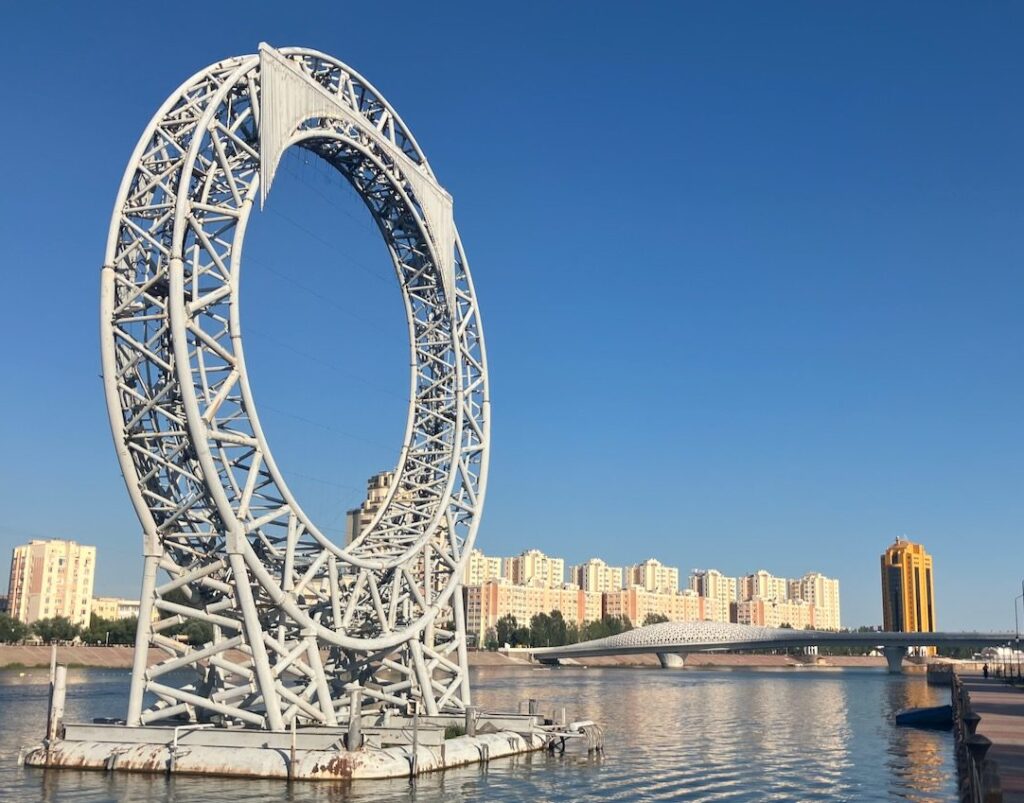
Astana, Kazakhstan landmark: A large, modern metal ring sculpture on the Ishim River with bridge and buildings in background.
Ishim Park
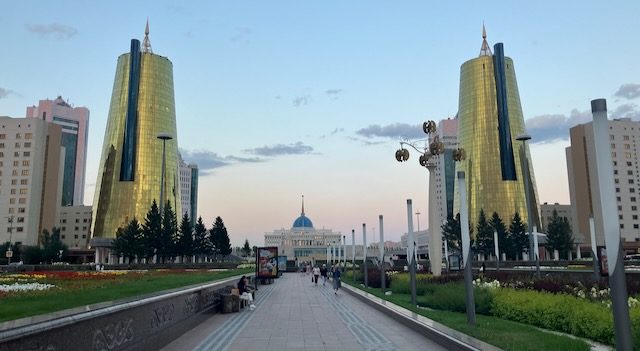
Astana cityscape with golden buildings, a walking path, and a palace in the background. Kazakhstan architecture.
Presidential Palace in distance
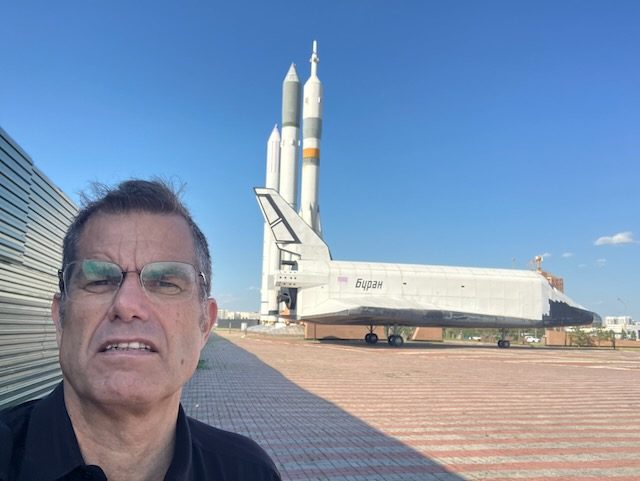
Astana landmark: Man poses with Buran spacecraft, a Soviet space shuttle, and rockets. Travel and tourism in Kazakhstan.
National Space Center

Find out more about ex-Soviet cities

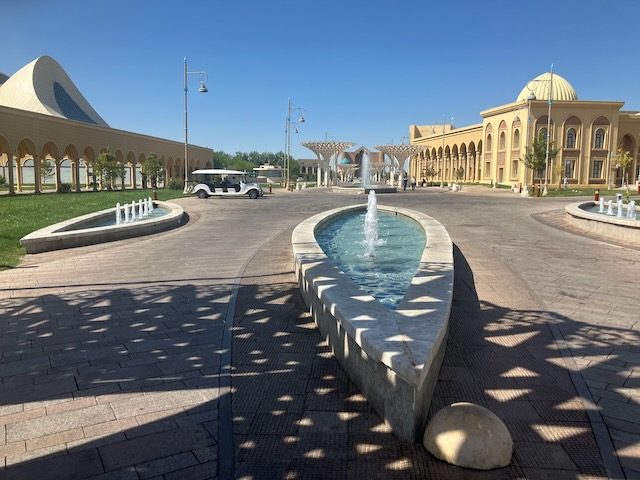
Turkistan architecture: Fountains and golden buildings in Kazakhstan. Landmark with blue sky. Discover Turkistan tourism.
Turkistan
Kazakhstan’s growing pilgrimage city of history and ambition.
Read More
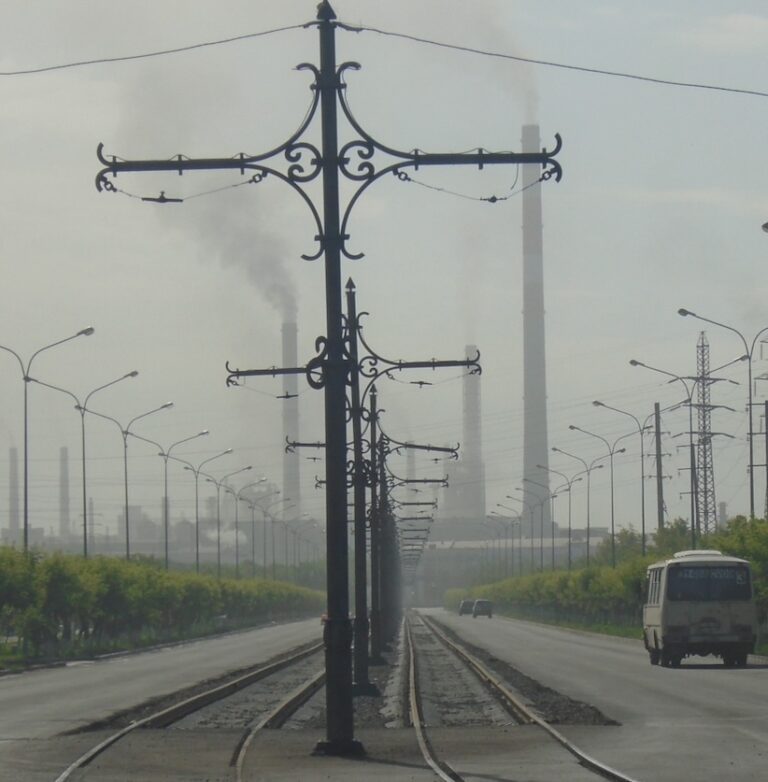
Temirtau, Kazakhstan: Industrial landscape with smokestacks, ornate power poles, and a bus on the road.
Temirtau
Kazakhstan’s gritty steel city shaped by Soviet industry.
Read More
Tashkent Metro station interior, Uzbekistan. Ornate columns, mosaic walls, and people waiting. Public transportation, travel.
Tashkent
Soviet legacy meets modern ambition in Uzbekistan’s fascinating capital.
Read More
Scroll to Top