Rabat–Salé: Morocco’s Most Liveable City (And Why It’s Overlooked)
A personal take on Morocco’s capital—where to stay, what to see, and how to get around
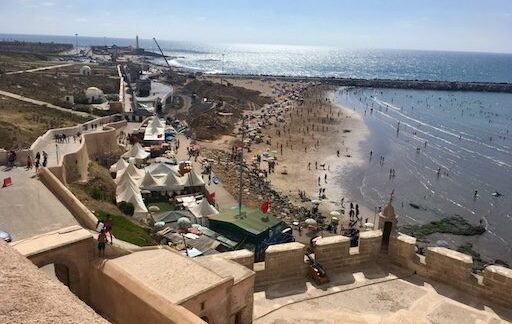
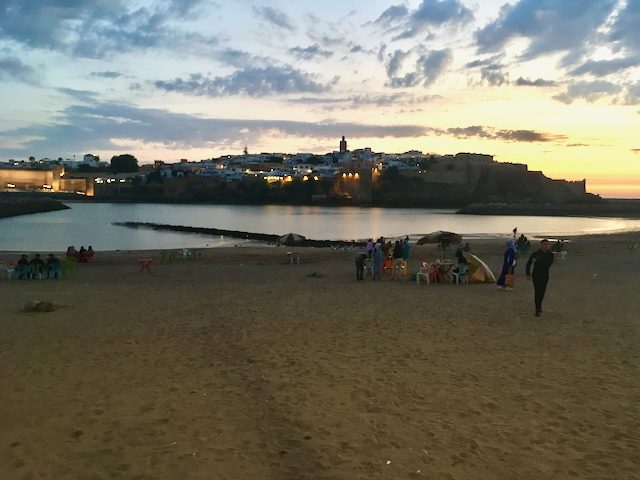
Overlooking beach from kasbah
Of all the places I visited in Morocco, Rabat stood out as the most pleasant. If I ever had to relocate to Morocco, it would be my city of choice. It offers a compelling mix of history and modernity. The medinas of both Rabat and Salé provide a rich glimpse into old Morocco, making it feel like a “two-for-one” experience. At the same time, Rabat is one of the country’s most cosmopolitan and liberal cities. A major highlight for me was its extensive tram system, which made exploring the area both convenient and scenic. While cities like Casablanca, Fes, and Marrakech are Morocco’s most famous destinations, Rabat remains a hidden gem that many travellers overlook.
The term Rabat–Salé refers to two cities separated by the Bouregreg River, along with Kenitra Province to the south, which together form a unified metropolitan area. Rabat, the capital of Morocco, is only the country’s seventh-largest city by population. However, when combined with its neighbouring city, Salé—a key commuter hub for Rabat—it forms the second-largest urban area after Casablanca.
• Calmer and more organised than Morocco’s headline cities • Coastal setting gives it space and a more relaxed pace • Two-in-one contrast – polished Rabat and more local Salé • Easy to navigate – the Rabat–Salé Tramway actually makes a difference
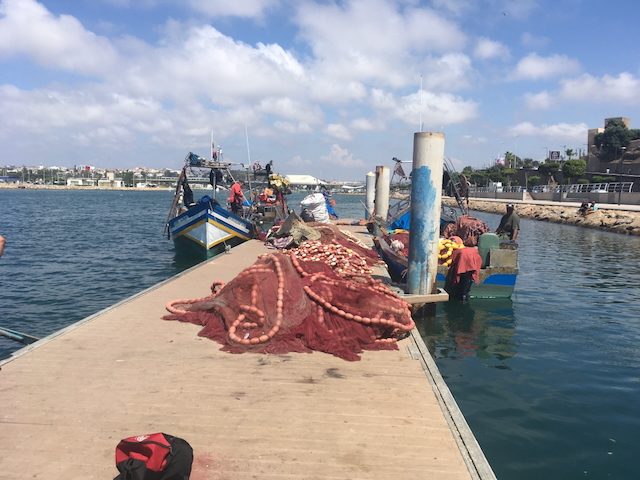
Rabat marina
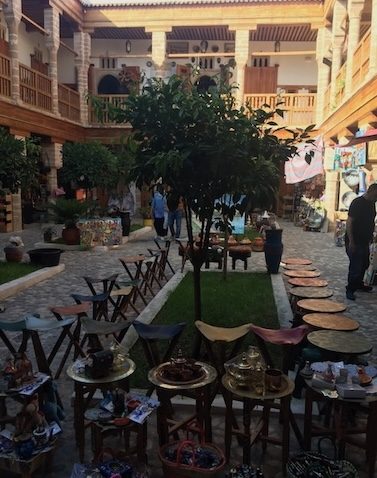
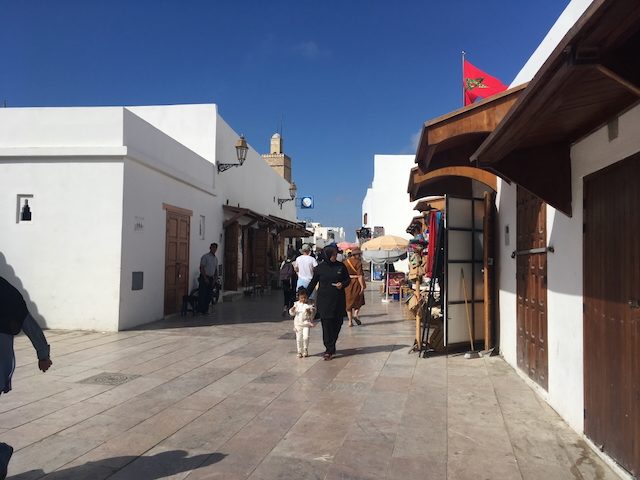
Rabat medina
A Brief History of Rabat—and Why It’s Paired with Salé
Rabat’s role as Morocco’s capital comes from a mix of history and strategic decisions. Originally founded as a fortified settlement – or ribat – between the 10th and 12th centuries, the city later declined and remained relatively small for centuries.
Its modern importance began in 1912, when French colonial administrator Hubert Lyautey moved the capital from Fes to Rabat, drawn by its coastal position, proximity to Casablanca, and room for expansion. After independence in 1956, Mohammed V kept Rabat as the capital, shaping its role as the country’s political centre. Today, Rabat is closely tied to its neighbour Salé, just across the Bouregreg River. While they are separate cities, they function as a single urban area, connected by bridges, the Rabat–Salé Tramway, and daily commuter flow. Salé is more residential and local in character, while Rabat serves as the administrative and diplomatic hub.
Together, they form one of Morocco’s largest metropolitan areas—something you notice quickly when moving between the two.
Rabat marina
Rabat medina
Where to stay
There are plenty of accommodation options across Rabat, and to a lesser extent in Salé. For many visitors, staying in a riad is the most popular choice. These traditional homes—built around a central courtyard—were originally designed for extended families and have since been converted into small guesthouses.
Many riads are elegant and atmospheric, often serving breakfast in the courtyard or on a rooftop terrace. While they offer a more authentic experience, they can also feel enclosed, with limited natural light in some rooms. They stay cool in summer, but can be noticeably cold during cooler months.
I stayed in a more open-style riad in Salé, which felt less confined and included a simple breakfast. Prices seemed to be a little cheaper across the river and key for me was being close to a tram stop.
Sunset view of the kasbah
Fairmont Rabat-Salé Hotel
What to see and do in Rabat- Salé
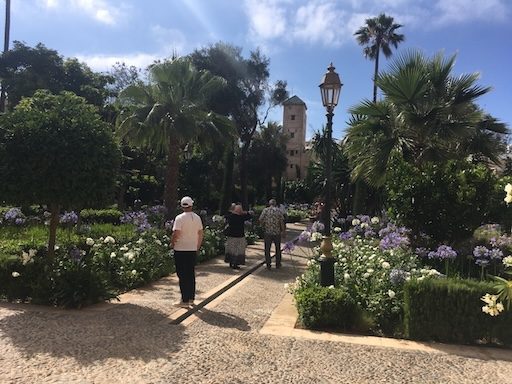
Andalusian Gardens
Kasbah des Oudayas
Kasbah des Oudayas
Rabat’s Riverside, Kasbah, and Medina
Crossing the bridge or taking the Rabat–Salé Tramway from Salé, it’s easy to reach Rabat’s riverside, which comes alive on weekends with locals strolling along the Bou Regreg. This leads directly to the Kasbah of the Udayas [map], a 12th-century fortress overlooking both the river and the Atlantic.
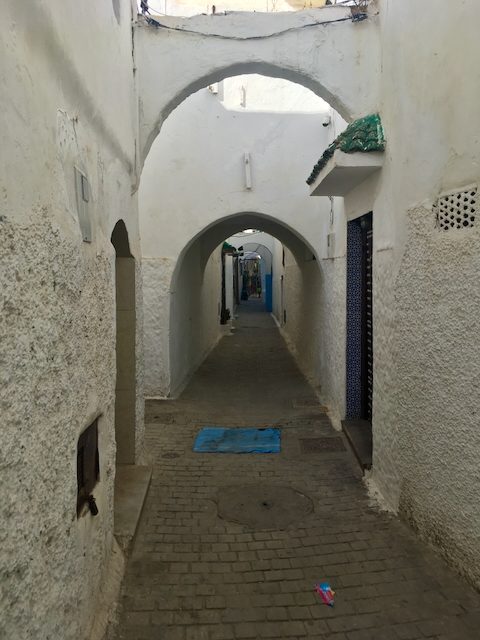
Inside, narrow alleys, blue-and-white walls, and small shops create a calmer, more contained version of a Moroccan medina. It also feels noticeably less pressured than the centres of Fes and Marrakech, with far fewer interruptions as you walk through.
The Andalusian Gardens offer a quieter escape, adding a more structured, almost European feel to the space. Rabat’s medina itself is smaller and more manageable than those in Fes or Marrakech, but still worth exploring for local crafts. From there, the coastline opens up into a long stretch of beach—more functional than spectacular, but good for a walk.
Medina in Salé
Salé Medina
Modern Rabat and the Waterfront
Beyond the historic core, Rabat quickly shifts into something more modern and structured. Moving inland, the diplomatic quarter—home to embassies and international NGOs—reinforces the city’s role as Morocco’s political capital.
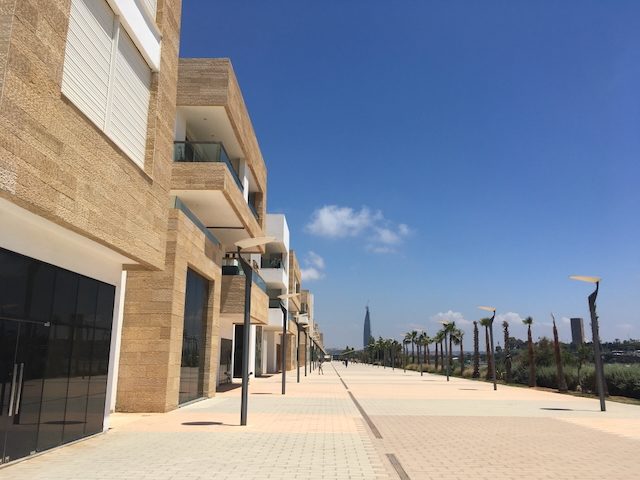
Along the waterfront, wide walkways, cafés, and restaurants create a relaxed, well-designed space that feels easy to spend time in. Further south, a long stretch of beach runs along the coast. It was quiet during my visit due to cooler spring temperatures, but would likely feel very different in the height of summer.
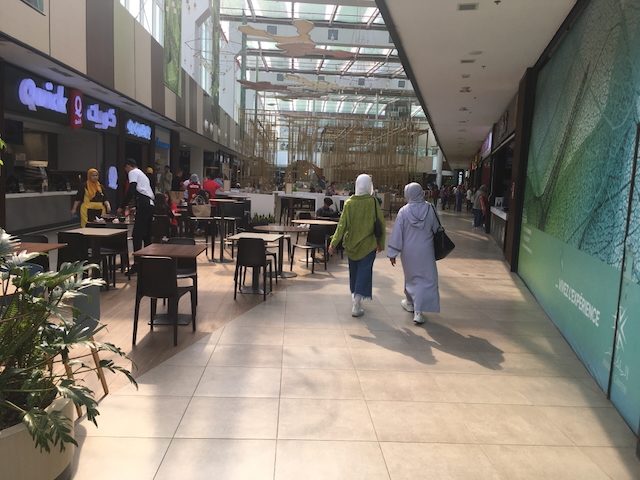
This part of the city also offers some of Rabat’s best shopping. Arribat Center stands out for its open, contemporary design, while Mega Mall Rabat is one of the largest and more traditional options. Rabat’s not flashy, but it’s practical—and noticeably more liveable the longer you stay.
Salé’s Medina and Local Flavour
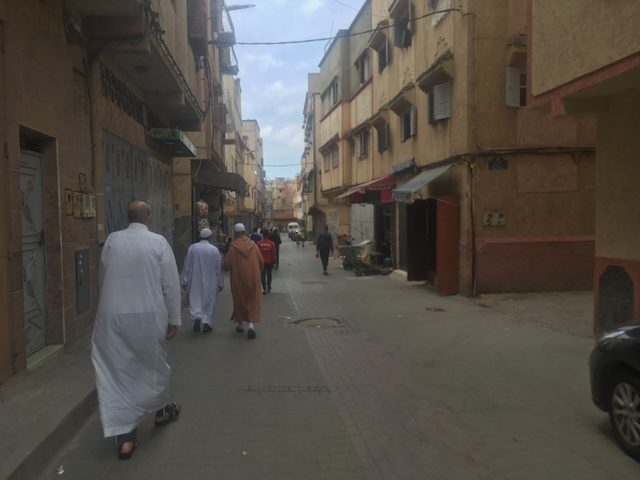
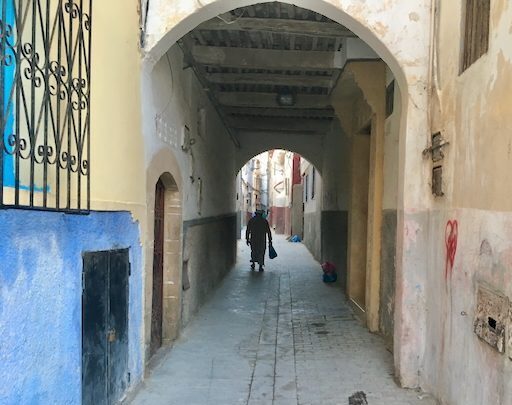
Across the river, Salé feels completely different. Its medina is less polished and far more local, with a raw, everyday atmosphere that contrasts sharply with Rabat. Staying in a riad here gives a better sense of traditional Moroccan architecture—courtyard homes designed for extended families, now often converted into small hotels. The streets can feel rougher, but also more genuine, especially compared to the more commercialised medinas elsewhere.
Much of Salé functions as a commuter city, and outside the old town it’s fairly ordinary. But that’s part of the appeal—taking the tram through it offers a more realistic view of daily life than most tourist-focused areas.
One of the most striking landmarks on the Rabat-Salé skyline is the Mohammed VI Tower, an architectural statement along the Oued Bou Regreg river. At 55 stories, it is the tallest building in Morocco and the third tallest in Africa, featuring a mix of offices, luxury residences, and the Waldorf Astoria Rabat-Salé hotel, which occupies 18 floors. Inaugurated in 2026, the tower is set to become a new symbol of modern Morocco.
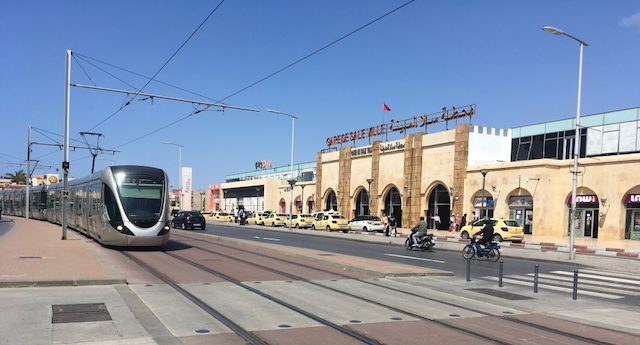
Tram outside Salé train station
How to get there
Rabat-Salé is conveniently located just 90 km from Casablanca, making it an easy journey whether by car, train, or bus. The drive takes less than 90 minutes, while the train ride—whether on the high-speed Al Boraq train or the regular ONCF service—takes about an hour and costs around 9 USD in second class (2026).
Coming from Fes, I took the train, which takes around three hours, making it ideal for coordinating hotel check-ins and check-outs. While most travellers disembark at Rabat Ville station, the train often stops at Salé station as well. Since my hotel was near Salé’s medina, I chose to get off there instead, which was just a short walk away from my accommodation.
While buses are available, I personally prefer traveling by train, as it is faster, more comfortable, and allows for better views of Morocco’s diverse landscapes. However, in areas not served by rail, I did opt for buses – normally operated by the government – to explore other regions and they were fine.
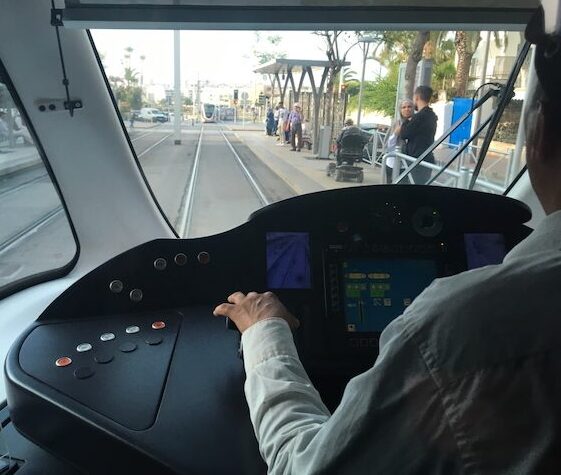
Tram driver
How to get around
The Rabat-Salé tramway, which opened on May 11, 2011, represented Morocco’s first modern tram system. Built at a cost of 3.6 billion Moroccan dirhams, it remains one of only two mass transit systems in the country alongside Casablanca’s network. As of 2026, the system operates two lines covering 26.9 kilometres (17 miles) with 43 stations, connecting Rabat and Salé across the Bouregreg River. Plans are underway for network expansion, scheduled for completion in 2028.
Single journey tickets cost 7 dirhams (75 US cents) as of 2026. The ticket is valid for unlimited travel across the network for one hour from first validation, including transfers between lines. You must validate it each time you board. I found it convenient that you can buy tickets in advance since they remain valid until first use. While monthly passes are available, there aren’t any shorter duration passes offered.
I found the tram extremely useful and enjoyable for exploring both cities. It not only provided efficient transportation but offered fascinating views along the way – I often hopped off when something caught my eye. The network connects both main train stations and key tourist sites, while also giving me a broader glimpse into everyday Moroccan life. This made it perfect for both getting around and experiencing the cities more authentically.
There is an extensive bus service, but the tram was more than sufficient for getting around and far easier to understand and navigate.
Real Estate in Rabat–Salé
On the Salé side, the riverside has been completely redeveloped over the past two decades. What were once sports fields have been transformed into a modern waterfront, anchored by a marina built in 2008 through land reclamation. Today, it serves as a hub for leisure boating and high-end residential living.
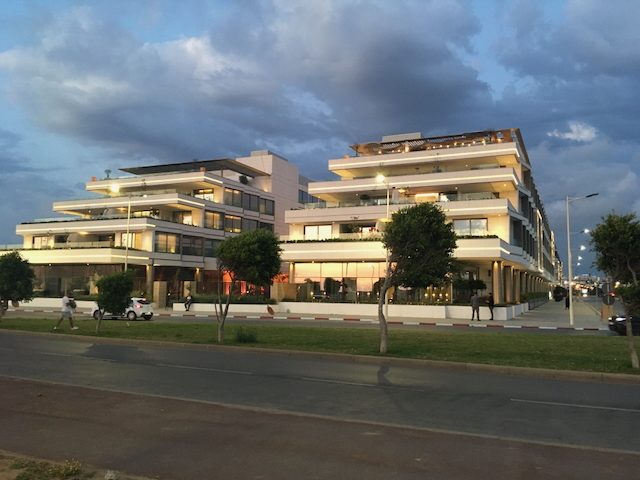
The centrepiece is La Marina Rabat-Salé, a master-planned district combining upscale apartments, retail space, and a waterfront promenade. Developments here are clearly geared toward larger households—something reflected in both layout and pricing.
Smaller units (under 200 sqm), particularly those with sea views, can exceed USD 3,000 per square metre. Larger apartments (300+ sqm), often set further inland, can drop to around USD 1,500 per square metre. Many of these properties are designed for multi-generational living, with some reaching up to eight bedrooms—impressive, but not especially practical for most buyers.
Crossing the river from Rabat to Salé can significantly reduce cost per square metre, often by close to half. Apartments dominate the wider Rabat–Salé market, making up roughly 70% of listings.
Back in Rabat, newer developments are also expanding into the diplomatic quarter, including projects like Rabat Square, which follow a similar high-end, master-planned approach.
Marina Residences
How Many Days in Rabat–Salé
I stayed three nights, which felt about right to get a proper sense of the city. It gave me time to explore both the older medinas and the more modern side—cafés, shopping centres, and the kind of everyday spaces that matter more if you’re staying longer than just passing through.
If you’re short on time, Rabat–Salé works well as a one-night stop, especially given how close it is to Casablanca and on the route toward Marrakech. You’ll still be able to see the main highlights without rushing.
That said, the city reveals more at a slower pace. Even the beaches—more functional than spectacular—are worth a relaxed walk rather than a quick stop.
Tonys' takeaway
The tranquil atmosphere of Rabat-Salé is effortlessly inviting, with its scenic riverside and coastal areas providing a perfect blend of relaxation and urban charm. The connection between the two cities is particularly picturesque, enhanced by the pleasant year-round climate—during my visit, the sunny 25-degree weather made exploring on foot a delight. Wide, well-maintained walkways line the waterfront, offering an array of charming cafés and restaurants where visitors can unwind with local cuisine or a coffee while enjoying the serene views.