KYRGYZSTAN

Balykchy: Kyrgyzstan’s fading Soviet gateway to Issyk-Kul

A gritty transport hub on the western edge of Issyk-Kul Lake, best known for its scenic train journey and still struggling to redefine itself after the collapse of the USSR
⁨Issyk Kul⁩, ⁨Balykchy⁩, ⁨Kyrgyzstan⁩ beach Иссык-Куль Балыкчы Ысык-Көл 巴雷克奇 伊塞克湖 バルクチ イシク・クル 발륵치 이식쿨 بالقشي إيسيك كول
Plyazh Aliya, Balykchy
 

Balykchy is a small town on the western edge of Issyk-Kul Lake in Kyrgyzstan and often serves as the first stop for travellers arriving from Bishkek or Almaty. Located around 175 km southwest of Bishkek at an altitude of roughly 1,900 metres, the town was historically known as Rybachye — Russian for “fisherman” — while the Kyrgyz name carries the same meaning, reflecting its long connection to the lake’s fishing industry.

During the Soviet era, Balykchy was an important centre for fishing, agro-industry and transport logistics around Issyk-Kul. Since the collapse of the Soviet Union, however, much of that economic base has faded, leaving behind a town that often feels caught between its industrial past and an uncertain future. Today, Balykchy has a population of around 50,000 people, the vast majority of whom are ethnic Kyrgyz.

During my two-day visit, I found Balykchy still searching for a new identity. One of its few modern attractions is serving as the terminus for the scenic train journey from Bishkek — a modest claim to fame for a town whose best days appear long behind it.

Once a key centre for the lake’s fishing fleet, agro-industrial activities, and logistics, Balykchy’s economy and infrastructure have declined significantly since the collapse of the Soviet Union. Today, the town is home to around 50,000 people, with about 90% identifying as Kyrgyz and 7% as Russian.

During my two-day visit, I found Balykchy still searching for a new identity. One of its few modern attractions is its role as the terminus for the scenic train route from Bishkek—a modest claim to fame for a town with a rich but fading past.

⁨Issyk Kul⁩, ⁨Balykchy⁩, ⁨Kyrgyzstan⁩ lenin factory Иссык-Куль Балыкчы Ысык-Көл 巴雷克奇 伊塞克湖 バルクチ イシク・クル 발륵치 이식쿨 بالقشي إيسيك كول
Lenin lives on in abandoned factory

Balykchy at a glance

  • Former Soviet industrial and fishing hub on Issyk-Kul Lake
  • Main western gateway to Kyrgyzstan’s largest lake
  • Scenic summer train from Bishkek is one of the town’s few major attractions
  • Soviet-era infrastructure and economic decline still dominate the landscape
  • Offers a raw glimpse into post-Soviet Central Asia rarely seen in tourist centres

A Soviet town struggling to reinvent itself

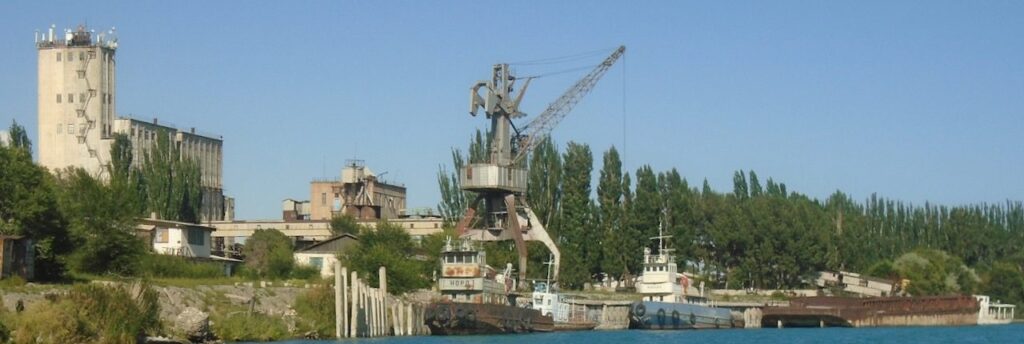
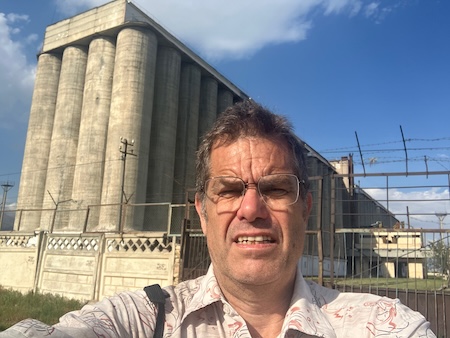
A major industrial and transport centre during the Soviet era with a focus on the wool and food processing, especially grain. However, following the collapse of the Soviet Union, the town lost much of its economic base, with the closure of nearly all its industrial and logistics facilities. Like many industrial cities in Central Asia, Soviet nostalgia lives on, with much of its former glory tied to that period. Lenin’s portrait remains well preserved on one derelict factory I visited.

Unlike more developed cities where former industrial areas like docks have been converted to thriving new neighbourhoods, much of Balykchy’s port area remains a state of decay with no clear path for revitalization.  The town’s population has largely stagnated in recent decades, reflecting the broader challenges faced by many post-Soviet industrial centres.

Balykchy, Kyrgyzstan
Centre of Balykchy town

Balykchy presents a unique blend of rustbelt grit and rustic simplicity. The town centre is a hardscrabble patchwork of modest markets focused on metalwork, machinery, and other small-scale trades, reflecting its industrial past. This starkly contrasts with the vast grazing lands and open spaces that surround Issyk-Kul Lake, offering a glimpse into the region’s pastoral heritage.

Unlike the more cosmopolitan capital of Bishkek, Balykchy offers few comforts for the modern traveller. During my visit, finding a decent cup of coffee was a challenge—there was only one place that served lattes, and ice was a rarity, available only on one of my two attempts. The absence of a developed café culture is striking, especially when compared to places like Vietnam or Morocco, where even small towns offer inviting cafés as a respite from wandering the streets.

Accommodation in Balykchy is primarily limited to homestays, which typically include a basic breakfast. Dining options are concentrated near the market, but they tend to be utilitarian rather than inviting. For travellers accustomed to more vibrant food scenes, the local eateries may feel underwhelming. Despite this, Balykchy offers a glimpse into a slower, less polished side of Central Asia—a town still navigating the transition from its Soviet industrial roots to an uncertain future.

Balykchy port shipyard view with crane, ships, and industrial buildings along the shore of Issyk-Kul lake in Kyrgyzstan.
Shipyard

Balykchy’s container economy and real estate market

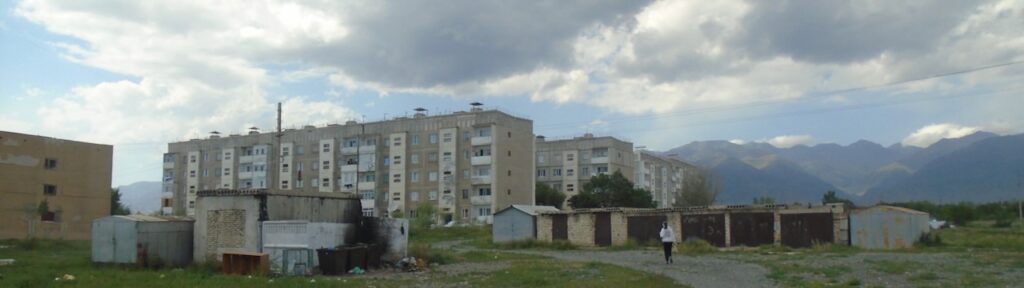
Balykchy apartments, Bishkek. Panorama view of apartment buildings with mountains in background, Balykchy, Kyrgyzstan.
Apartments in Balykchy

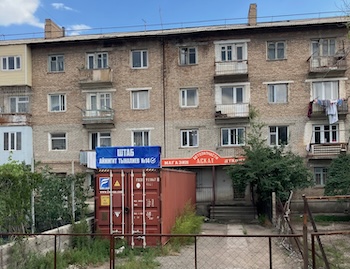
Balykchy’s real estate market is largely characterised by Soviet-era apartment blocks, which dominate much of the town alongside houses and villas of varying quality. Often set against scenic mountain backdrops, apartments generally sell for around USD 500 per square metre, although many buildings are in a poor state of repair.

Shipping containers are a surprisingly common sight across Balykchy, repurposed for a range of uses, particularly retail. In 2018, the town recorded 6,662 inbound containers compared with just 290 outbound, a sharp decline from the 22,637 inbound containers recorded in 2014. Much of this drop followed Kyrgyzstan’s accession to the Eurasian Economic Union, which brought stricter import regulations. The imbalance itself reflects a common issue in economies focused on raw material exports, which typically require fewer containers than imported consumer goods.

Novi Bazaar [map] is perhaps the clearest example of this container economy, with many of its small retail units created from converted shipping containers. Similar structures are also widely used for storage by local businesses throughout the town. Despite this, Balykchy has only a handful of supermarkets with fairly limited stock, highlighting how underdeveloped the retail environment still feels.

Land prices in Balykchy remain extremely low, reflecting the town’s uncertain economic prospects. Plots near the centre can reportedly be found for as little as two US dollars per square metre, with prices falling even further in more remote areas. That affordability says as much about the town’s limited opportunities as it does about the cost of property itself.

Balykchy⁩ ⁨Issyk Kul⁩, ⁨Kyrgyzstan⁩ Иссык-Куль Балыкчы Ысык-Көл 巴雷克奇 伊塞克湖 バルクチ イシク・クル 발륵치 이식쿨 بالقشي إيسيك كول Balykchy novi Bazaar
Novi Bazaar

Tourism around Issyk-Kul bypasses Balykchy

After independence, tourism around Issyk-Kul struggled for many years, although visitor numbers have started to recover more recently, particularly from other parts of Kyrgyzstan, Russia and neighbouring Kazakhstan. However, most travellers bypass Balykchy in favour of more established destinations such as Cholpon-Ata on the northern shore or the area around Bokonbayevo to the south. Many tourists do pass through the town, often arriving on the scenic train from Bishkek, but then quickly continue onwards by bus or shared taxi to more attractive parts of the lake.

Thanks to its altitude, Balykchy enjoys relatively moderate summer temperatures of around 20°C, making it comfortable for outdoor activities, though perhaps less ideal for a traditional beach holiday. The water is usually just warm enough for swimming, although the town’s strong winds can sometimes make beach days less appealing. Balykchy has two small beaches, but facilities are limited and there are no hotels nearby. Instead, they tend to be used mostly by locals with picnic setups and deck chairs.

The town’s long, cold winters further reduce its appeal as a year-round destination. While Balykchy could work as a base for hiking and cycling around Issyk-Kul and the nearby mountains, accommodation remains basic, with only a small number of homestay-style guesthouses available. As a result, many travellers choose the more developed town of Karakol on the eastern side of the lake instead. Balykchy remains stuck in something of a “chicken and egg” situation — limited facilities discourage visitors, while weak demand discourages further investment.


Balykchy Kyrgyzstan
Beach and pier in Balykchy
Balykchy⁩ ⁨Issyk Kul⁩, ⁨Kyrgyzstan⁩ Иссык-Куль Балыкчы Ысык-Көл 巴雷克奇 伊塞克湖 バルクチ イシク・クル 발륵치 이식쿨 بالقشي إيسيك كول
Statue in Balykchy

What it feels like to stay in Balykchy

Accommodation in Balykchy is primarily limited to homestays, which typically include a basic breakfast. The one I stayed in was pleasant enough, with a friendly owner. Dining options are concentrated near the market, though they tend to feel more utilitarian than inviting. For travellers accustomed to more vibrant food scenes, the local eateries may feel somewhat underwhelming.

Unlike the more cosmopolitan capital of Bishkek, Balykchy offers few comforts for the modern traveller. During my visit, finding a decent cup of coffee was a challenge — there was only one place serving lattes, while ice was a rarity, appearing on only one of my two attempts. The absence of a developed café culture is striking, especially when compared with places such as Vietnam or Morocco, where even small towns often offer inviting cafés as a respite from wandering the streets.

Despite this, Balykchy offers a glimpse into a slower, less polished side of Central Asia — a town still navigating the transition from its Soviet industrial roots to an uncertain future.

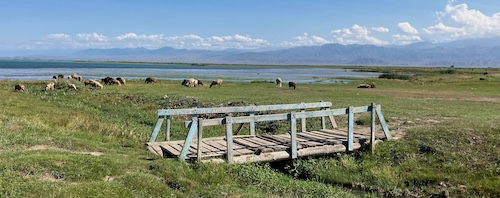
Grazing by Issyk-Kul lake in Balykchy

Getting to Balykchy on Kyrgyzstan’s scenic lake train

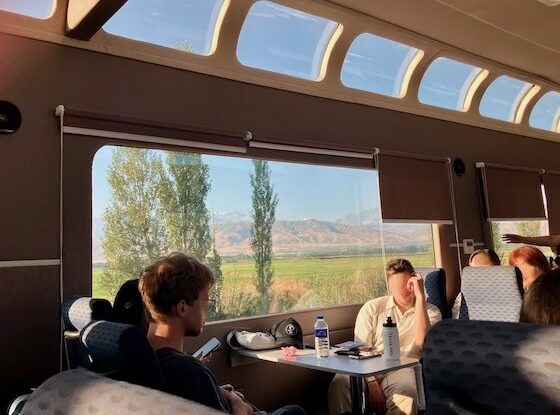
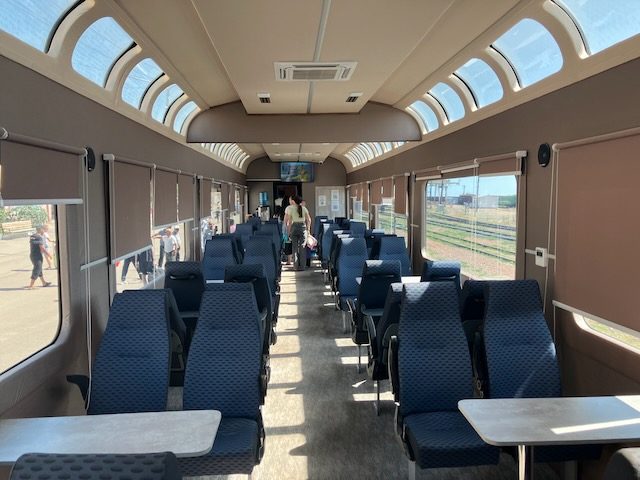
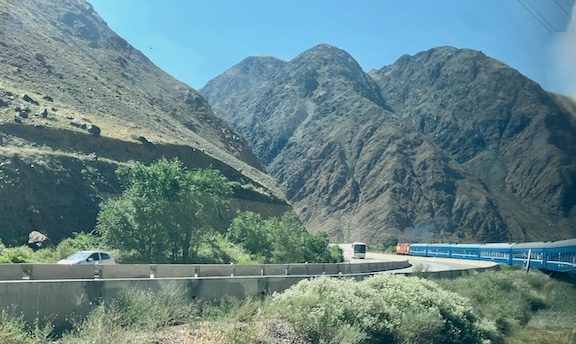
A scenic tourist train is one of the best ways to travel from Bishkek to Balykchy, particularly during the summer high season when it operates. The service is one of the few things helping to put Balykchy on the map for visitors. The journey takes around four hours, with large windows offering comfortable sightseeing along the way.

There are several classes available, including a luxurious VIP/Salon carriage, though I travelled in the more affordable Lux class, which was perfectly adequate. It also provided a chance to interact with very friendly local travellers. A Lux ticket costs around five US dollars. The train departs Bishkek in the morning and returns in the early evening. Tickets can be booked through the Kyrgyzstan Railways website, though schedules may change.

In addition to the tourist train, other public transport options around Issyk-Kul include infrequent bus services and more frequent shared taxis. While these taxis can be cramped, most journeys are relatively short — often only an hour or two — so your legs may not be too numb by the end of the trip.

Иссык-Куль Балыкчы Ысык-Көл 巴雷克奇 伊塞克湖 バルクチ イシク・クル 발륵치 이식쿨 بالقشي إيسيك كول Bishkek train Balykchy
On the train from Bishkek to Balykchy
Balykchy train interior: Modern passenger car with blue seats, tables, and panoramic windows for scenic views during travel.
Passengers leaving train at Balykchy
Balykchy train journey: Scenic mountain view on the Bishkek-to-Balykchy train route, Kyrgyzstan. Adventure travel by rail.
View of train on way to Balykchy
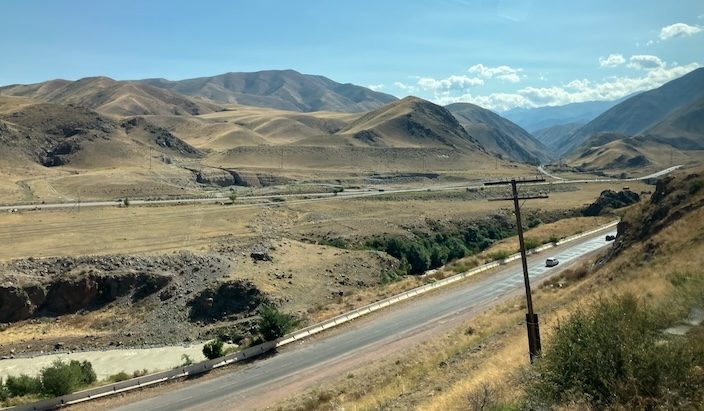
Train journey from Bishkek to Balykchy: Scenic mountain landscape with road, river, and clear blue sky in Balykchy, Kyrgyzstan.
Scenic view from train

Tonys' takeaway

While Balykchy may not be for everyone, and many visitors will understandably prefer the more tourist-friendly towns around Issyk-Kul, those interested in the Soviet legacy will find the town offers a stark, almost cold-hearted glimpse into what life once looked like and how it has evolved since. Balykchy still feels like a town struggling with its identity, trying to find its place in a rapidly changing region and world. For me, though, there has always been a certain charm in rusting metal.
At a grain silo
Container extension
Scroll to Top